
Bottom line: polypropylene, polyethylene, and nylon are three different engineering materials with three different jobs inside a leveling kit — PP gives clips a clean snap-off, PE survives 100+ wedge reuses without cracking, and nylon carries strength-critical tools like suction cups. The resin differences (tensile, cold behavior, fatigue) are measurable and are exactly what a wholesale buyer should hold a factory to, because material grade is what survives a Canadian winter on the jobsite.
The Material Map: PP vs PE vs Nylon in Your Leveling Kit
One leveling kit is really four or five small engineering decisions. Here's how the three plastics map onto the parts, in the way we build them at our factory:
⚖️ Guide prices are subject to raw material cost fluctuations — contact us for current pricing.
| Part | Material | Why | FOB (wholesale) |
|---|---|---|---|
| Tile leveling clips | PP | Stiff enough to snap off clean at the score line | $0.70–0.85/bag |
| Tile leveling wedges | PE | Survives 100+ insertion/removal cycles | $0.80–1.00/bag |
| Cross tile spacers | PP PE blend | PP holds ±0.1mm shape, PE adds flex so they don't snap | $0.60–0.80/bag |
| Electric suction cup | Nylon + NBR | Nylon body carries 100 kg loads; NBR pad seals | $8–10/set |
| Tile leveling pliers | PP over steel | Steel drives the jaw; PP grip keeps it non-slip | $1.10–1.50/pc |
FOB prices from our wholesale price book, 100 pcs/bag for clips, wedges, spacers. Suction cup per set, pliers per piece.
Notice there's no single "best" plastic — each one wins a specific job. The rest of this guide explains the material properties behind that map, so you can verify a factory is actually using them.
Tensile Strength: Nylon ~60–90 MPa vs PP ~27 MPa vs PE ~20–30 MPa
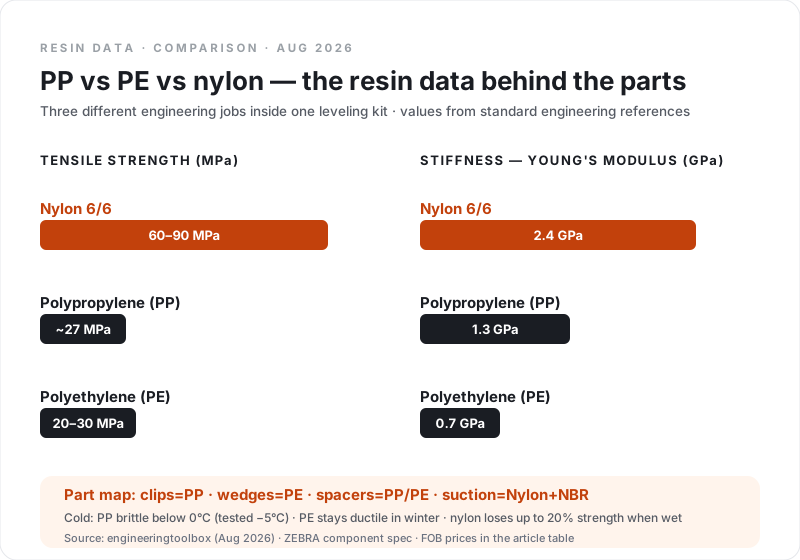
Tensile strength is the number that answers "how much force can this part take before it deforms or breaks?" The three plastics sit far apart (engineering values, engineeringtoolbox, Aug 2026):
| Property | PP (polypropylene) | PE (polyethylene) | Nylon (PA 6/6) |
|---|---|---|---|
| Tensile strength | ~27 MPa | ~20–30 MPa | ~60–90 MPa |
| Stiffness (Young's modulus) | ~1.3 GPa | ~0.7 GPa | ~2.4 GPa |
| Elongation at break | 200–700% | 20–100% | ~90% |
| Cold behavior | Brittle risk below ~0°C | Stays ductile cold | Tough, but loses up to 20% strength wet |
| Typical role in the kit | Clips, spacers | Wedges | Suction cups, tool bodies |
Standard engineering values: engineeringtoolbox.com, retrieved Aug 2026. Values vary by grade and additive package.
Read the stiffness column and the clip decision writes itself. A clip needs to be stiff enough to hold two tile edges level and then snap cleanly at a score line — that's a PP job. Nylon is 2×+ stronger but too tough to break off consistently; PE is too soft to hold a level edge. Each material is over-engineered for the wrong job and just right for its own.
Cold Weather: Why PP Clips Pass the -5°C Test and Cheap Blends Don't
Polypropylene has a real weakness the industry has to engineer around: its glass-transition range sits around -20°C to 0°C, so as the temperature drops toward freezing, PP starts losing ductility and can turn shatter-prone. That's why professional clip specs are tested at -5°C — it's the cold threshold that separates a clip that works in a Canadian or northern-European winter from one that cracks on the jobsite.
This is exactly where material quality, not material type, decides the outcome. 100% virgin PP holds consistent break force from -5°C to 50°C. Recycled or heavily blended PP contains degraded polymer chains from previous heat cycles, and in the cold that degradation shows up as premature breakage — the reason recycled clips can lose up to 40% of their break strength in cold weather. A tile leveling system wholesale buyer holding a brand should insist on 100% virgin PP for clips and ask for the material certificate; that one line on the order is what protects your name on the bag when January comes.
Fatigue: Why Wedges Are PE, Not PP
A wedge does the opposite of a clip: it flexes, over and over. Inserted, driven in, pulled out, inserted again — a professional wedge gets cycled 100+ times across projects. PE is the material that survives that. Its lower stiffness is an advantage here: it flexes without cracking, keeps its wedge profile, and returns to shape. PP under the same repeated flexing develops stress cracks at the taper — which is why a disposable PP wedge rounds off after 1–3 uses while a PE wedge is still seating tiles years later.
This is the subtle part of the material story: the "weaker" plastic on paper is the stronger choice for a fatigue job. When a supplier quotes you "all PP" wedges as a cost saving, what they're really quoting you is a wedge your installers will throw away mid-project. Our reusable tile leveling wedges are PE for this exact engineering reason.
Where Nylon Earns Its Place
Nylon is the odd one out in the consumable kit — you won't find it in clips or wedges, because it's too strong and too expensive for a part that breaks off or gets recycled. Nylon earns its place where strength under repeated load is the whole job: tool bodies and lifting equipment. Our electric suction cup is a nylon body with an NBR pad because the body carries a 100 kg slab and has to survive years of shop-floor abuse. At 60–90 MPa tensile, nylon is 2–3× stronger than PP or PE, and its one weakness — losing up to 20% of its strength when wet — doesn't matter for a tool that grips dry tile faces.
The lesson for a buyer: when a part has to hold a load repeatedly, that's the nylon or metal job. When a part is meant to be consumed, that's the PP or PE job. A factory that understands this split is engineering the kit; one that just buys "plastic" is guessing.
Cost per Part: What the Material Choice Actually Adds
Finally, the price reality. Material choice is a real cost lever, but it's a small one — which is exactly why cutting it is a bad trade. At wholesale, the parts in a leveling kit price as follows, FOB (our price book, Aug 2026):
- PP clips — $0.70–0.85 per 100-piece bag. The commodity line, priced to move.
- PE wedges — $0.80–1.00 per 100-piece bag. A fraction more for a part that outlasts the project.
- PP PE spacers — $0.60–0.80 per bag. The blend is where the "cheap" grades get hidden.
- Nylon tools — the suction cup at $8–10/set; nylon is a pricier resin, but on a $8-10 tool it's cents.
At these prices, downgrading a wedge from PE to PP saves a distributor a rounding error per bag — and hands the installer a wedge that dies mid-project, which is how a brand loses the account entirely. Material grade is a 5–15% cost lever, not a 2× lever. The right call is almost always: keep the right material, and negotiate on volume, freight, and mix. The tile leveling system wholesale supplier pricing page shows what the full kit runs when you order it properly.
Frequently Asked Questions
Which plastic is used for tile leveling clips and wedges?
Clips are made of polypropylene (PP) so they snap off clean at the score line; wedges are made of polyethylene (PE) so they survive 100+ insertion and removal cycles without cracking. Cross spacers use a PP PE blend — PP holds dimensional stability while PE adds flexibility. Nylon appears in strength-critical tools like suction cups (Nylon + NBR body).
Which material is stronger: nylon, polypropylene, or polyethylene?
Nylon is strongest at about 60–90 MPa tensile with ~2.4 GPa stiffness, followed by polypropylene at ~27 MPa / 1.3 GPa, then polyethylene at ~20–30 MPa / 0.7 GPa. But stronger isn't always better — clips need PP's clean snap-off and wedges need PE's fatigue resistance, so each part uses the material that matches its mechanical job.
Does polypropylene break in cold weather?
PP's glass-transition range sits around -20°C to 0°C, so it loses ductility and can turn brittle as the temperature approaches freezing. That's why professional clip specs are tested at -5°C: 100% virgin PP holds consistent break force from -5°C to 50°C, while recycled or heavily blended PP can lose up to 40% of its break strength in the cold.
Why are reusable wedges made of PE instead of PP?
PE survives repeated flexing: a professional wedge is inserted and removed 100+ times across projects, and PE flexes without cracking and keeps its profile, while PP develops stress cracks at the taper under the same cycling and rounds off after 1-3 uses. Lower stiffness is an advantage in a fatigue job.