
The dead blow's reduced rebound is real but marginal for tile seating — the rubber mallet does the same job for a fraction of the price.
Bottom line: the tool name that protects your tile is the only one worth stocking for seating — soft-face. The steel tapping hammer ($27–45 retail) is a thick-set-era tool that chips thin-set tile, and the dead blow ($22–39) is a nice physics story that does nothing a rubber mallet can't do for seating. The rubber/synthetic mallet at $0.80–2.00 wholesale is the right SKU, at the right margin.
Tapping Hammer vs Rubber Mallet vs Dead Blow: What Actually Differs
Strip away the branding and the difference between the three tools is one variable: what the striking face is made of. The tapping hammer has a steel face. The rubber mallet has a soft rubber or synthetic face. The dead blow is a soft face too, but its head is filled with steel shot so the face doesn't rebound off the work. That single variable — face hardness and rebound — decides which tools are safe on tile, and which are a liability.
This comparison is about seating tools: the tool that settles a freshly set tile into the adhesive. It is not about the carbide-edged cutting hammer you break tiles with — that's a demolition tool with a different job entirely.
The Tool You're Replacing: Tapping Hammers Are Steel-Faced
Walk the tile aisle and the "tapping hammer" — sold by Estwing as a drilling/crack hammer, model B3-2LB style, around $27.43 at Walmart to $44.80 at Walmart Business — is a short-handled steel hammer with a shock-reduction grip. Sources: Walmart; ASC Scientific; Walmart Business, Aug 2026. It is descended from the mason's hammer of the thick-set era, when tile was bedded in a mortar bed and struck through a wooden block to level it.
That history is the problem. On modern thin-set adhesive and large-format tile, the steel face has no give: strike the tile directly and you risk a hairline crack or a chipped edge, and the tool's mass is wrong for the gentle seating taps a rectified tile needs. Installers who keep one use it with a rubber or wooden tapping block — the steel never touches the tile. That is an extra tool to carry, and it is exactly the complication a tile mallet hammer removes.
Seating Thin-Set Tile: Soft-Face or It Doesn't Get Installed
Seating works like this: the tile goes down on a notched adhesive bed, the leveling clips are tensioned at the corners, and the installer taps the tile toward the clips to bed it flat before the adhesive skins over. The tool for that tap must be softer than the tile — otherwise the strike point becomes a stress concentration. That is the whole case for the soft face, and it is why the rubber/synthetic mallet, not the steel hammer, is the tool on every modern tiler's bench.
Our factory makes two versions. The BM-C01 rubber-handle mallet comes in 25#, 30#, 35# and 40# weights with 240–305mm handles; the BM-C02 wooden-handle version runs 8/12/16/24/32 oz. Both ship at $0.80–2.00 per piece wholesale with a 500-piece MOQ. Source: ZEBRA TOOLS wholesale price list, Aug 2026. For a distributor that already imports tile leveling clips and tile leveling wedges, the mallet is the natural third line in the same container.
Dead Blow, Explained in One Paragraph
A dead-blow mallet (Trusty-Cook is the reference brand) has a soft polyurethane face and a head filled with steel shot. When the face strikes, the shot keeps moving for a fraction of a second, so the tool doesn't rebound — the energy stays in the face and transfers into the work instead of bouncing back into your wrist. That reduced rebound is a genuine advantage for repetitive hammering on formwork, metalworking and joinery. Sources: Lee Valley Trusty-Cook dead-blow listings, Aug 2026.
For seating tile, the honest answer is that the advantage is small. A tile tap is a light, single, controlled strike — not a sustained rebound-prone hammering job — so the rubber mallet already gives you the soft face, and the dead blow's anti-rebound physics buys little on the tile floor. The price gap is where the story ends: Trusty-Cook hand mallets run $22.00 (13 oz) to $39.00 (45 oz), with sledge versions at $75–105. Source: Lee Valley, Aug 2026.
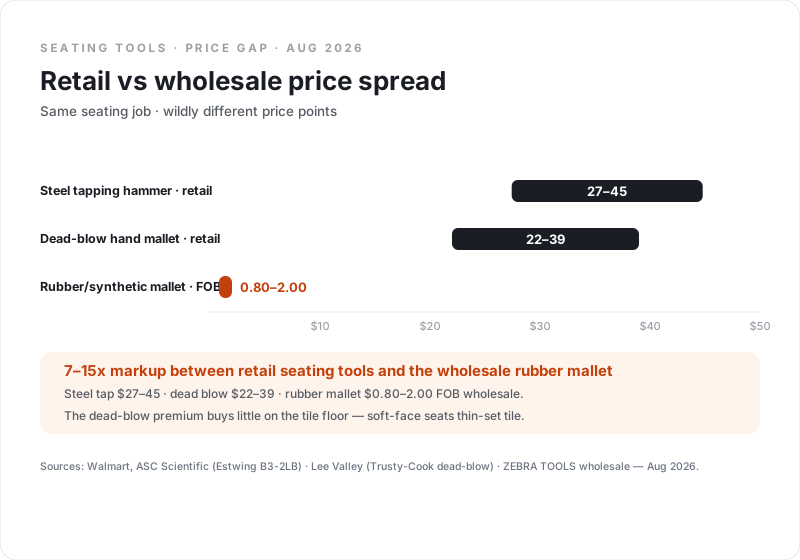
The Price Gap: $22–45 at Retail vs $0.80–2.00 Wholesale
Put the three numbers side by side and the margin story is obvious. A steel tapping hammer retails at $27–45. A Trusty-Cook dead blow retails at $22–39. A rubber-handle mallet from our tile leveling system wholesale supplier line ships at $0.80–2.00 per piece — before retail markup, which typically lands it at $6–12 on a shelf. That is a 7–15x wholesale-to-retail spread on the soft-face tool, against commodity-thin margins on branded steel and dead-blow tools that are already priced for the pro counter.
For the distributor the read is simple: the soft-face mallet is the SKU with the pricing headroom, and it is also the tool your installer customers actually need. Steel and dead-blow tools are better left to the tool specialty channel, where brand names do the selling.
What Distributors Should Actually Stock
The decision for a tile and leveling-system distributor is not "which hammer do I replace" — it is which SKUs to carry, and it maps cleanly:
- Rubber/synthetic mallets — the seating SKU. BM-C01 (rubber handle, 25–40#) for pros, BM-C02 (wooden handle, 8–32 oz) for the DIY/light range. Both soft-face, both surface-safe, wholesale $0.80–2.00.
- Steel tapping hammer — only if your market does thick-set. Traditional mud-set tile still uses it with a tapping block. If your buyers are thin-set and large-format, skip it — it's a liability SKU that chips tile and collects dust.
- Dead blow — only if you also sell general construction. If a customer walks in asking for "dead blow," they usually mean a soft mallet for seating tile; the real $22–39 Trusty-Cook product is for metal and formwork. Carry it only when your range already covers that buyer.
Buy from a China tile leveling system manufacturer that ships mallets with clips and wedges in the same container — one FOB quote, one lead time, and the three tools your tiler uses on every job arrive together. The full tile leveling systems range covers the rest of the install.
Frequently Asked Questions
What's the difference between a tapping hammer and a rubber mallet?
The face. A tapping hammer has a steel face (Estwing B3-2LB-style, $27–45 retail) and is a thick-set-era tool — it strikes tile only through a tapping block, and on direct contact with thin-set tile it risks chips and cracks. A rubber or synthetic mallet has a soft face that is safer than the tile it strikes, so it seats thin-set tile directly. For modern large-format tile on thin-set adhesive, the rubber mallet is the correct seating tool.
Is a dead-blow mallet worth it for tile?
For seating tile, mostly not. A dead blow's steel-shot core eliminates rebound, which helps sustained hammering on formwork, metal and joinery — but a tile tap is a light, single strike, where a rubber mallet already has a soft face and seats tile cleanly. Dead-blow hand mallets (Trusty-Cook) run $22–39, against $0.80–2.00 wholesale for a rubber-handle mallet. The premium buys little on the tile floor.
What size rubber mallet do tile installers use?
The BM-C01 rubber-handle mallet comes in 25#, 30#, 35# and 40# weights with 240–305mm handles; the BM-C02 wooden-handle version runs 8/12/16/24/32 oz. Both are soft-face and surface-safe, ship at $0.80–2.00 per piece wholesale with a 500-piece MOQ, and pair with tile leveling clips and wedges in the same container.
Can I use a rubber mallet on large-format tile?
Yes — that is its main use. Seat large-format tile into a notched thin-set bed with leveling clips tensioned at the corners, tapping gently toward each clip so the tile beds flat before the adhesive skins over. The soft face spreads the strike and protects the tile surface, which is exactly why steel tapping hammers are avoided on large-format work.