
Tile Lippage Tolerance: the ANSI Numbers (0.8mm, 1.6mm) and Where Each Applies
Lippage is the difference in elevation between adjacent tiles. The US workmanship standard ANSI A108.02 sets the allowable lippage by joint width, not by tile size — a point most arguments get wrong. The limits as written:
| Assembly | Grout joint | Allowable lippage |
|---|---|---|
| Pressed floor & porcelain tile | 1/16″ to <1/4″ | 1/32″ (0.8mm) + inherent warpage |
| Pressed floor & porcelain tile | ≥1/4″ | 1/16″ (1.6mm) + inherent warpage |
| Mortar beds & cleavage membranes | traditional mud jobs | up to 1/8″ (3.2mm) |
| Gauged porcelain panels | any | 1.0mm |
| Natural stone tile | 2–7mm joints | 1.0mm |
Source: ANSI A108.02 §4.3, as summarized in the TCNA Handbook FAQ (tcnatile.com), TileLetter and CTaSC — retrieved September 5, 2026. Substrate prerequisite: 1/4″ in 10 ft (6mm in 3m) flatness.
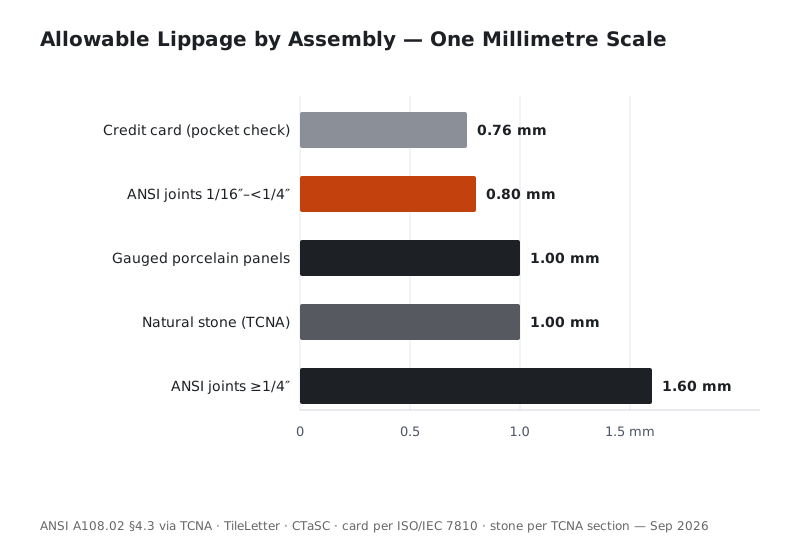
Two readings of that table matter commercially. First, wall tile lippage follows the same numbers — a wall is not held to a tighter limit, but raking light across a wall makes edge shadow read worse than the measurement, which is why wall disputes settle on measurement, not sight. Second, the 1.6mm wide-joint tier is not a loophole: a rustic 6mm joint install genuinely gets double the tolerance of a 3mm rectified floor, because a wide grout line visually absorbs the step.
Plus Inherent Warpage: Why a Compliant Floor Can Still Read 1mm
The phrase doing the heavy lifting in the standard is plus inherent tile warpage. ANSI A108.02 does not ask the installer to absorb the tile's own curvature: if the manufacturing standard permits, say, a 0.4mm crown across a tile body, the field limit becomes 0.8mm + 0.4mm = 1.2mm at the offending edge. This is the single most-missed clause in client handovers — a floor measuring 1.0mm can be fully compliant on non-rectified body-colored porcelain and a genuine defect on tight-tolerance rectified stock.
For wholesale buyers this clause is a specification tool. Rectified tile (edge-ground after firing, minimum 3mm joints) carries a tighter warp allowance than calibrated or non-rectified lines, so the same leveling hardware delivers a flatter read on rectified stock. When a distributor's customer rejects a floor, the first document is not the installer's photos — it is the tile box's declared warpage class against what the joint actually measured. That is also why our guides push buyers toward clips sized for the tile at hand: tile leveling clips hold the joint flat while the adhesive cures, but no clip can remove curvature that was fired into the body.
How to Measure Lippage: Feelers, a Lippage Gauge or a Credit Card
Three tools cover every field situation, in ascending order of defensibility:
- Credit card test — a bank card is 0.76mm thick (ISO/IEC 7810 ID-1). Slide it against the high edge: if it will not pass, the lippage is under ~0.76mm, inside the 0.8mm narrow-joint limit; if it slips through freely with room to spare, measure properly. Fast, free, and on every job site — but informal, and 0.04mm under the limit, so it screens rather than certifies.
- Feeler gauges — the machinist's blade set reads the actual gap in 0.05mm steps. Ideal for proving a marginal edge is, for example, 0.85mm rather than 0.75mm.
- A dedicated lippage gauge (transition gauge) — a stepped or dial gauge that bridges both tiles and reads the step directly, up to several millimetres. This is the instrument to put in front of an inspector or a disputed handover, and what the number on the test report should come from.
Whatever the tool, measure at the corners where four tiles meet and mid-edge on long formats — large-format planks bow at the centre, so a clean mid-edge with a peaked end joint is the classic warpage signature, not an installation fault.
4 Field Checks Before You Blame the Leveling Clips
When a container's product gets blamed for an out-of-tolerance floor, these four checks separate hardware faults from substrate and tile faults — in the order they should be run:
- Substrate flatness first. The standard assumes 1/4″ in 10 ft (6mm in 3m). A floor outside that cannot be rescued by any clip; it needs grinding or self-leveler before reset. Measure with a 10 ft straightedge, not by eye.
- Verify the actual joint width. A 3.0mm rectified joint falls in the 0.8mm tier; measure whether the joint really is 3.0mm along the disputed run — spacer tolerance on our lines is ±0.1mm, so the joint is what the spacer says.
- Check the tile's warp class. Stack five tiles face to face from the same box; a visible rocker means the warpage allowance is being consumed before installation even starts. Non-rectified floors legitimately measure above 0.8mm.
- Confirm clip density. Four clips per tile — about 11 clips per m² on 60×60 format — hold edges flat during cure. Gaps in clip lines show up exactly as single-edge steps. Where a low corner persists on a wavy substrate, horseshoe shims (1.5–6.5mm, color-coded, stackable) lift it while the adhesive is still workable.
If all four pass and the floor still measures out of tolerance, the hardware is genuinely at fault — and that is a conversation we take seriously with batch samples and test reports, because our name is on the carton.
Writing Lippage Into a Wholesale Spec Sheet
Distributors and tender writers who quote the standard correctly settle disputes before they start. A defensible spec line reads: “Allowable lippage per ANSI A108.02: 1/32″ (0.8mm) plus inherent tile warpage on grout joints under 1/4″; measured with a stepped lippage gauge at tile corners; substrate flatness 1/4″ in 10 ft.” The three clauses — limit, instrument, prerequisite — are what make the number enforceable.
For the hardware side of the same spec sheet, factory-direct FOB Ningbo pricing runs as follows:
| Product | Key spec | FOB / 100 pcs | MOQ |
|---|---|---|---|
| Tile leveling clips | 1.0–3.5mm tile thickness, 4 clips/tile ≈ 11/m² | $0.70–0.85 | 500 bags |
| Horseshoe shims | 4 color codes, 1.5–6.5mm, stackable | $0.60–0.70 | 500 bags |
⚖️ Guide prices are FOB Ningbo at MOQ and subject to raw material cost fluctuations — contact us for current pricing.
Sourcing the tolerance hardware from one tile leveling system manufacturer keeps the spec internally consistent — clip base thickness, shim steps and joint sizes are engineered as one system rather than matched across suppliers. Full line details and container loading plans are on the tile leveling system wholesale supplier page.
Frequently Asked Questions
What is the allowable tile lippage tolerance?
Per ANSI A108.02 §4.3: 1/32″ (0.8mm) plus the tile's inherent warpage for pressed floor and porcelain tile on grout joints from 1/16″ to under 1/4″; 1/16″ (1.6mm) plus warpage at joints of 1/4″ and wider; up to 1/8″ (3.2mm) on traditional mortar beds. Gauged porcelain panels and natural stone are held to 1.0mm.
Does the credit card test actually work for lippage?
As a screen, yes: a bank card is 0.76mm thick (ISO/IEC 7810 ID-1), so if it will not slide under the high edge, lippage is below about 0.76mm — inside the 0.8mm narrow-joint limit. If it passes freely, measure with feeler gauges or a lippage gauge, because the card is 0.04mm thinner than the limit and cannot certify a borderline edge.
Why does my floor measure over 0.8mm but still pass inspection?
The most common reason is the warpage clause: ANSI A108.02 adds the tile's inherent, manufacturing-standard warpage allowance to the 0.8mm field limit, so a non-rectified porcelain measuring 1.1mm can be fully compliant. Wide joints also earn a higher tier — 1.6mm at 1/4″ and above. A floor can only fail on measurement if the joint width, the tile's warp class and the substrate flatness (6mm in 3m) are documented alongside the lippage reading.
How do you fix lippage that is above tolerance?
While the adhesive is still workable: slide a horseshoe shim under the low edge to lift it (1.5–6.5mm color-coded steps, stackable for intermediate heights), re-seat the tile against 4 leveling clips per tile (≈11 clips/m² on 60×60), and let it cure. After cure, the only fix is re-laying the tile — grinding a high edge is a last resort that damages the glaze.